Development that starts with people's own capacity.
PALM2 is a registered trust based in Gudalur, working with around 12,000 families in the Nilgiris and Erode districts of Tamil Nadu.
To reduce poverty among marginalised families, towards a respectable standard of living and a balanced ecosystem.
- People first
- Women in the lead
- Transformation
- Equality
- Transparency
- Partnership
- Food security
These seven values shape every programme we run and every decision we make.
From PALM 1 to PALM2
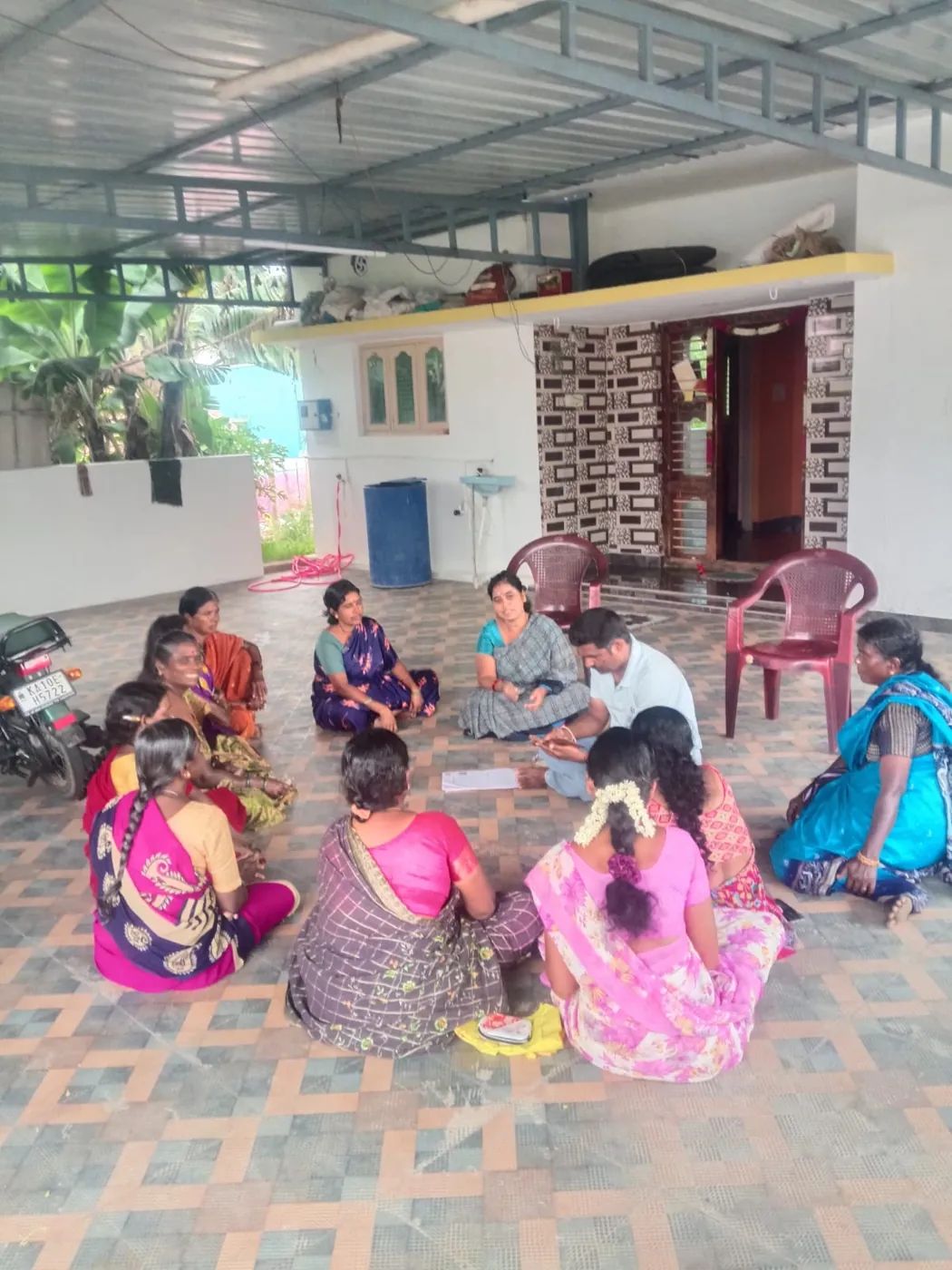
PALM2 grew out of a long history of community work. A Dutch development worker, with a background in nursing, had already led community programmes in Africa and among Tamil plantation workers in Sri Lanka. Through PALM 1, thousands of toilets, numerous water supply schemes and 15 hospitals, medical centres and schools were built — all by the people themselves, through village committees.
Since the eighties, development thinking has shifted from infrastructure to people's own capacity and resources. PALM2 took shape in 2002 in the Nilgiris, first at the request of plantation workers — many of them Sri Lankan repatriates who returned to India in the 1970s and 80s.
Neighbouring villages soon joined, starting in O'Valley in the Gudalur Block, an area known for its unresolved land issues, where no farmer has been able to obtain ownership of the land they till.
Our journey, 2002–2025.
Twenty-three years of steady growth, from a handful of tribal villages in Gudalur to learning centres, women's enterprises and disaster response across two districts.
- 12,000+
- families reached by 2012
- 500+
- Self-Help Groups formed
- 800+
- farmers engaged in 2018
- 4,000+
- children reached with child protection awareness
- 15
- villages covered in Pandalur
-
2002–2005
Foundation
- Establishment and registration of PALM2
- Tribal village mobilisation in Gudalur
- Formation of Self-Help Groups (SHGs)
- Basic livelihood and awareness programmes
- Training for women in gender, leadership and finance management
- Relief support after the Tsunami at Tharangampadi, Nagappattinam
-
2006–2010
Growth
- Expansion to Thalavady (Erode District)
- Stronger women's SHGs and micro-savings
- Organic agriculture and farmer training
- Community-based organisations formed
- Farmers producer company formed
-
2011–2012
Scale
- Reached over 12,000 families
- 500+ Self-Help Groups established
- NABARD Farmer Clubs formed
- Health and tuberculosis awareness
- Skill development initiatives
-
2013–2015
Enterprise
- Promotion of women entrepreneurship
- Environmental conservation and plantation drives
- Tribal pre-school and child education support
-
2016–2017
Livelihoods
- Household toilets built in tribal communities
- Income generation units established
- Seeds and manure support for farmers
- Women leadership development
- Agriculture market linkages
-
2018
15 years
- 15-year milestone celebrated
- “Grow Box” environmental initiative launched
- Engaged with over 800 farmers
-
2019
Relief
- Flood relief and rehabilitation support
- Child protection awareness reached 4,000+ children
- Community health programmes
- Work extended to Pandalur Taluk
-
2020
COVID-19
- Emergency response: food kits, masks and sanitisers
- Support to daily-wage and vulnerable families
-
2021
Women-led units
- Butter fruit (avocado) seeds distributed to farmers
- Women-led livelihood units established
- Online training and capacity building
-
2022
New skills
- Mushroom cultivation for tribal women
- Pickle and jam production units for women
- TNPSC coaching for tribal girls
- Shelter and emergency tarpaulin distribution
-
2023
Pandalur
- Expansion to Pandalur, covering 15 villages
- Tribal teacher training with certification
- Career guidance and youth development
-
2024–2025
Resilience
- Livelihood and sustainable agriculture programmes continue
- Child protection and POSH training
- Disaster preparedness and community resilience
Programmes built on clear goals.
- 1
Build the values and skills of marginalised people by forming groups, and strengthen people's organisations that can handle their own development and human rights issues.
- 2
Raise family incomes for people below the poverty line through training and access to loan schemes, so they can start a trade or profession and reduce unemployment.
- 3
Promote total organic farming — improving soil health and phasing out chemicals — through practical training, for sustainable food security.
- 4
Reduce environmental degradation by involving all stakeholders in soil, water and waste management, and by promoting flora, fauna and tree planting.
Chosen for attitude, trained for the field.
We select staff more for their attitude towards the poor than for the degrees on their paper. Every new team member is trained in the self-help group concept, communication, basic administration, problem solving and bank linkage — with gender equity in every module and Participatory Rural Appraisal (PRA) at the core.
Community Resource Persons — one per community organisation — are trained and supported by their own communities to gradually take over from our field staff.
8
CDWs
7
Learning Center teachers
1
Program Supporter
1
Program Manager
1
Office Staff
5
Board Members
Registered, accountable, connected.
PALM2 is legally registered with the Government of India under the Trust Act (Reg. No. 58/02 BK4), is affiliated with the Tamil Nadu Women Development Corporation, and works with government departments across the region.